How to Choose the Best Bread Making Equipment for Home Baking Success
In the world of home baking, the right bread making equipment can be the key to achieving the perfect loaf. For both novice bakers and seasoned enthusiasts, understanding which tools and machines to invest in can significantly enhance the baking experience. With countless options available on the market, from mixers to bread machines and specialty pans, it can be overwhelming to select the right equipment that suits your needs and baking style.
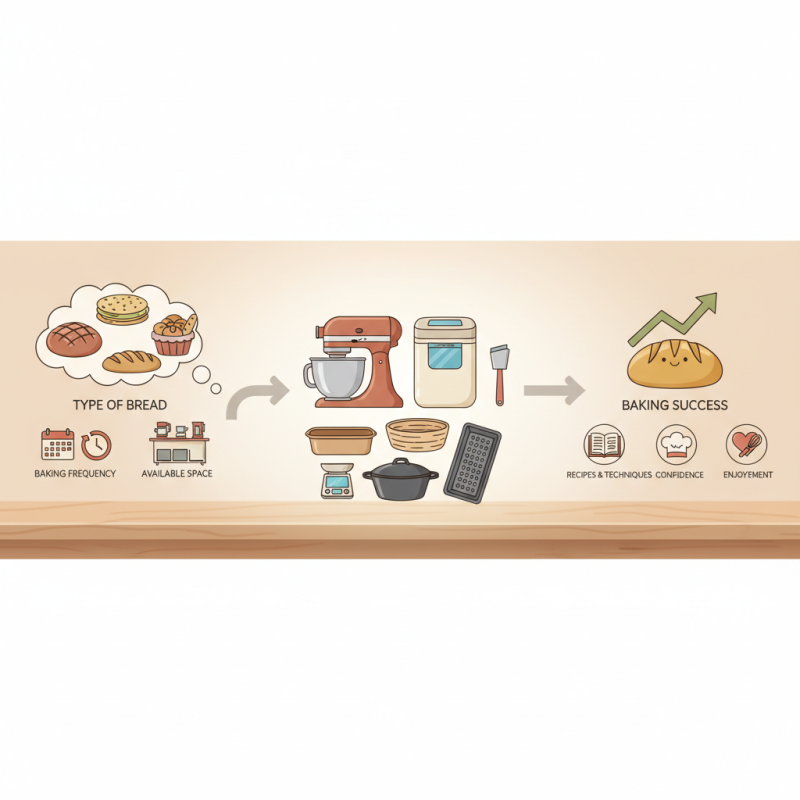
When choosing bread making equipment, it’s essential to consider factors such as the type of bread you wish to create, your baking frequency, and the available space in your kitchen. Each piece of equipment serves a unique purpose, contributing to the overall process of mixing, kneading, proofing, and baking. By evaluating these aspects, you can make informed decisions that align with your baking goals and preferences.
Ultimately, selecting the best bread making equipment will set the foundation for your baking success, allowing you to explore a variety of recipes and techniques with confidence. With the right tools by your side, the journey of creating delicious homemade bread becomes not only more achievable but also significantly more enjoyable.
Key Considerations for Selecting Bread Making Equipment
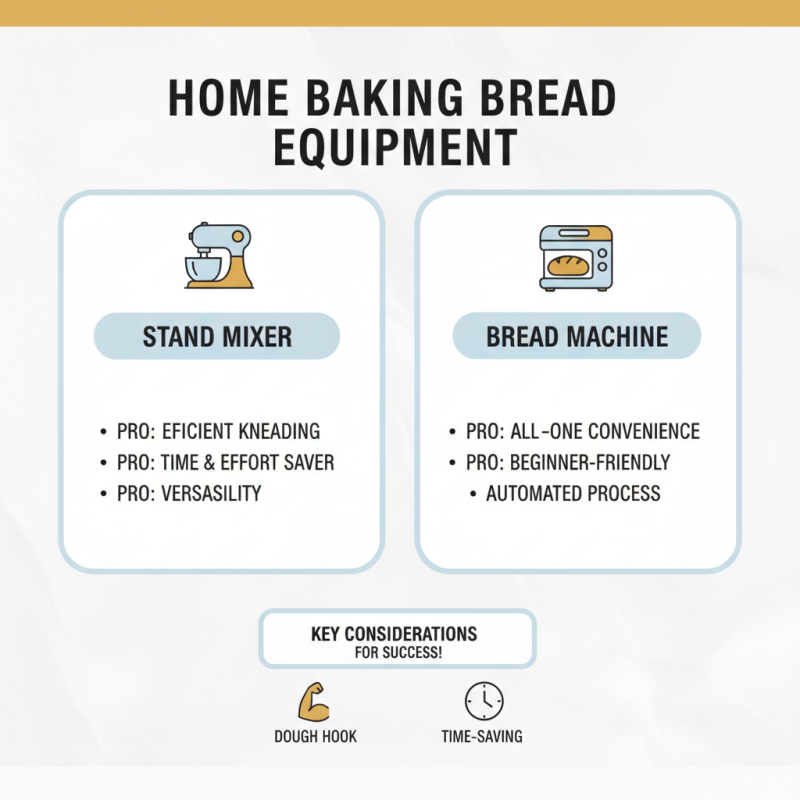
When selecting bread making equipment for home baking, several key considerations can significantly enhance your success. First and foremost is the choice of a reliable stand mixer or bread machine. A stand mixer equipped with a dough hook can help knead the dough effectively, saving time and effort compared to manual kneading. On the other hand, a bread machine offers convenience for beginners, allowing them to simply add ingredients and let the machine handle the mixing, kneading, and baking.
Another essential factor is the variety of baking pans available. Different bread recipes may require specific shapes and sizes of pans, such as loaf pans, baguette trays, or artisan baking stones. Opting for non-stick, heavy-duty pans can ensure even baking and easy release of the bread. Additionally, investing in a good thermometer can help monitor dough temperature, which is crucial for optimal yeast activity and achieving desired textures in the final product. Overall, understanding these considerations will pave the way for successful home baking experiences.
Essential Tools for Successful Home Bread Baking
When embarking on the journey of home bread baking, having the right tools can make a significant difference in achieving tasty and satisfying results. At the core of essential equipment is a good quality mixing bowl. A sturdy bowl allows for effective mixing of ingredients while providing enough space for dough to rise. Look for one that is easy to handle and can accommodate various batch sizes. Additionally, a set of measuring cups and spoons is crucial for accurate ingredient ratios, ensuring that the perfect balance is achieved.
Another vital tool is a bread-making surface, ideally a clean, flat countertop or a dedicated pastry board. This space should be sufficient for kneading the dough, which is a critical step in developing gluten for a good texture. A bench scraper can also be invaluable for dividing dough and keeping your workspace tidy. Lastly, investing in a reliable baking vessel, such as a baking stone or a Dutch oven, aids in achieving the desired crust and even baking. Each of these tools contributes to a more manageable and successful baking experience, helping bakers transform simple ingredients into delightful loaves.
How to Choose the Best Bread Making Equipment for Home Baking Success - Essential Tools for Successful Home Bread Baking
| Equipment |
Purpose |
Features |
Price Range |
| Stand Mixer |
Kneading dough efficiently |
Multiple attachments, variable speed settings |
$250 - $600 |
| Bread Machine |
Automated bread baking |
Programmable settings, non-stick pan |
$70 - $300 |
| Dutch Oven |
Creating a steamy environment for crust |
Heavy cast iron, lid included |
$50 - $250 |
| Proofing Basket |
Supporting dough during rising |
Natural rattan, various shapes |
$10 - $30 |
| Digital Kitchen Scale |
Accurate ingredient measurement |
Zero function, multiple measurement units |
$10 - $50 |
| Baking Stone |
Enhancing crust quality |
Thermal mass, porous material |
$20 - $100 |
| Dough Scraper |
Cutting and handling dough |
Durable plastic or metal, comfortable grip |
$5 - $20 |
Comparing Manual vs. Electric Bread Makers
When it comes to choosing the right bread-making equipment for home baking,
the first decision to make is between manual
and electric bread makers.
Manual bread-making equipment, such as hand mixers, mixing bowls, and traditional loaf pans,
provides a tactile and traditional experience. This approach allows bakers to have complete control over
each step of the process, from kneading to shaping. Many home bakers enjoy the artistry involved in
manually crafting their bread, which can also lead to a deeper understanding of the ingredients and techniques.
On the other hand, electric bread makers
offer convenience and consistency, perfect for those with busy lifestyles.
These machines can mix, knead, and bake bread with minimal input from the baker, allowing for a
more hands-off experience. Electric models typically come with pre-programmed settings, enabling users
to experiment with different types of bread without having to master each technique individually.
While these machines reduce the hands-on time required, they might limit the baker's creative options,
as the process is more automated. Ultimately, the choice between manual and electric bread makers
depends on individual preferences for control, convenience, and the overall baking experience.
Helpful Accessories to Enhance Your Baking Experience
When it comes to enhancing your home baking experience, incorporating the right accessories can make a significant difference. One essential tool for any aspiring baker is a high-quality kitchen scale. Accurately measuring ingredients is crucial for achieving that perfect loaf, and a scale ensures precision that standard measuring cups often lack. This allows for consistency in your bread-making process, leading to better results every time.
Another valuable accessory is a dough scraper. This tool not only helps in dividing and shaping your dough but also makes cleanup a breeze. Whether you’re working with sticky or wet doughs, a dough scraper can help you manage and manipulate your ingredients with ease. Additionally, investing in a good proofing basket can enhance the texture of your bread by helping it maintain its shape during the final rise. Using a proofing basket allows for better airflow around the dough, resulting in a superior crust and crumb structure in your finished loaf.
Essential Bread Making Equipment for Home Baking
This bar chart illustrates the importance ratings of essential bread making equipment for successful home baking. Each equipment type is rated on a scale from 1 to 10, based on its significance in the bread-making process.
Maintenance Tips for Longevity of Bread Making Equipment
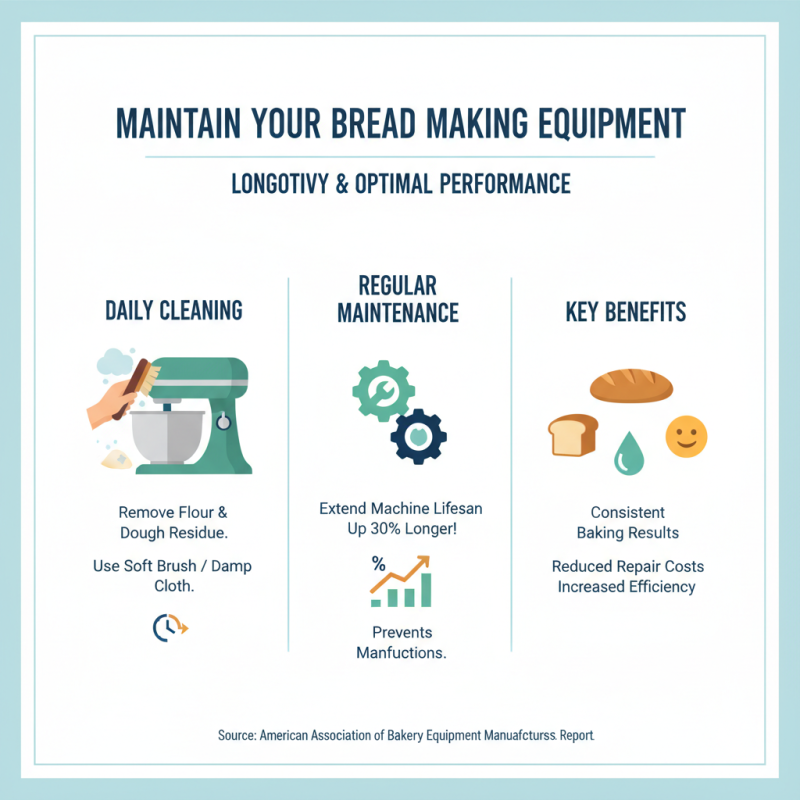
Maintaining bread making equipment is crucial for ensuring longevity and optimal performance. According to a report published by the American Association of Bakery Equipment Manufacturers, regular maintenance can extend the lifespan of machines by up to 30%. Simple practices such as daily cleaning can prevent the accumulation of flour and dough residue, which can lead to machine malfunction. Using a soft brush or a damp cloth can effectively remove excess flour from the mixer and the bread machine, while ensuring that components maintain their functionality over time.
In addition to routine cleaning, periodic inspections are essential. The European Federation of Bakery and Confectionery Industries highlights that checking for wear and tear on parts can prevent costly repairs in the future. For instance, a worn-out dough hook can damage the mixing bowl and affect the quality of the bread. Furthermore, lubricating moving parts according to the manufacturer's recommendations can significantly improve performance and efficiency, as it reduces friction and wear. By adopting these maintenance tips, home bakers can not only ensure their equipment lasts longer but also enhance their baking results.